

Yogi - A sort of denifition.

Note to reader: This piece blends a bit of humor with the reality of today’s yoga culture, based on my personal experience. It is shared with respect for all paths and with the intention of inviting reflection, not criticism.
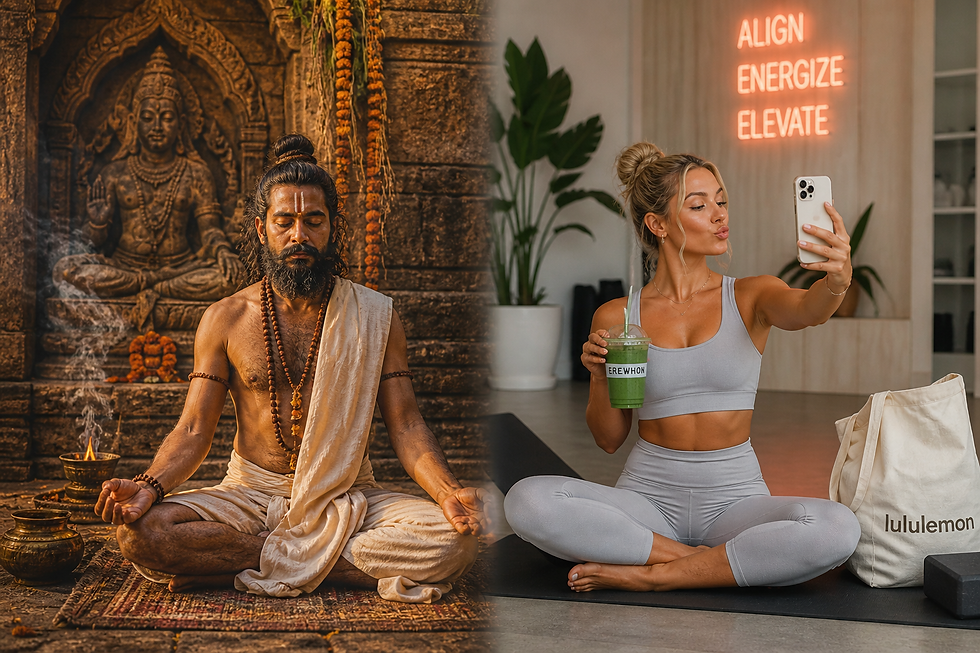
It’s 5:30 a.m. in Los Angeles. You walk into a hot yoga studio before the sun has fully risen. The door opens, and a wave of heat hits your face. Rows of yoga mats are placed inches apart, perfectly aligned, forming a grid across the room. At that same hour, across the world in India, the morning unfolds differently. The scent of incense rises slowly into the air as a small lamp is lit for puja, with soft bells ringing and hands folding in prayer. Two groups of yogis, two different practices.
In the traditional Indian understanding, a yogi is someone devoted to yoga as a path of spiritual realization rather than physical exercise. Classical texts describe a yogi as a disciplined seeker pursuing union with the Divine, self-mastery, and inner awakening. This path is lived through practices such as meditation, self-study, engagement with sacred teachings, ethical living, and Ayurvedic principles that support balance in body and mind.
Today there’s a distinct image of the modern yogi that has taken shape in the United States, and nowhere is it more recognizable than in Los Angeles. Here, yoga moves easily between discipline and lifestyle, blending wellness, identity, and social presence. The so-called “Lululemon yogi” flows from a heated vinyasa class to the parking lot, sipping a smoothie popularized by Hailey Bieber at Erewhon Market, phone in hand, capturing the morning’s “grounding practice.” In this version of yoga, the experience is shaped as much by environment as by intention. Premium activewear, destination-based yoga experiences in Sedona or Joshua Tree, and a carefully curated routine all become part of the practice. The aesthetic is intentional, the lifestyle is visible, and yoga becomes something that is not only practiced, but also expressed and shared.
On the other hand, the traditional yogi in India keeps things simple and intense in a different way. The day starts before sunrise, not because it is trendy, but because it is expected. The heat is part of the experience, not something to escape. There is no playlist, no mirrors, no matching set, just a practice that happens whether it is comfortable or not. Even there, different images of the yogi exist. One is the strict, disciplined practitioner, vegetarian, committed to daily puja, and moving through advanced postures with precision and control. Another is the Westerner who travels to India searching for the “authentic” experience, often arriving unprepared for how demanding it can be. Early mornings, long hours, little comfort, and a level of intensity that does not adjust to individual preference. What begins as a challenge often becomes a story, one that is later shared back home as part of the experience of having “done yoga in India.”
Ultimately, these contrasts show how yoga has taken on different meanings across cultures, shaped by context, values, and intention. From disciplined spiritual practice to modern lifestyle expression, yoga continues to evolve while carrying traces of its origins. Rather than one version replacing another, these interpretations exist side by side, reflecting individual choice and what each person values in their practice. A yogi, in its most essential sense, is not defined by appearance, location, or lifestyle, but by commitment to the path. A yogi is one who seeks integration of body, mind, and consciousness. This pursuit is lived through consistent practice, self-inquiry, and awareness, whether expressed through meditation, movement, or daily life.
Author: Lety RoGu This piece blends a bit of humor with the reality of today’s yoga culture, based on my personal experience. It is shared with respect for all paths and with the intention of inviting reflection, not criticism.
Comments